

Choosing the Right Pallet Truck for Efficient Material Handling
Contents
Key Takeaways
- Understanding your operational needs is crucial for selecting the appropriate pallet truck.
- Factors such as load capacity, fork dimensions, and wheel type significantly impact efficiency and safety.
- Regular maintenance and adherence to safety standards ensure longevity and optimal performance.
Table of Contents
- Assessing Operational Requirements
- Determining Load Capacity
- Evaluating Fork Dimensions
- Selecting the Appropriate Wheel Type
- Considering Environmental Factors
- Prioritizing Safety Features
- Maintenance and Durability
- Conclusion
Assessing Operational Requirements
Choosing an effective pallet truck begins with a thorough evaluation of your material handling operations. Consider the types of goods you typically handle, the size of loads, and how frequently loads need to be moved throughout your facility. High-volume warehouses with varied stock may require specialized pallet trucks that can handle different pallet types and weights. For operations with tight storage space or narrow aisles, compact, low-turning-radius models are ideal for maximizing maneuverability and throughput.
Understanding your unique work environment is just as important. Whether your facility is a retail space, manufacturing plant, or cold storage warehouse, the surrounding conditions can influence which truck model to choose. Assess door clearance, ramp gradients, and floor condition to determine the required durability and handling power. Consulting with warehouse staff and supervisors can also help identify productivity bottlenecks that the right pallet truck might resolve. A small upfront investment in the right truck can translate to fewer workplace injuries, reduced downtime, and improved efficiency in the long term. The right choice saves time and reduces manual strain on workers, boosting efficiency for daily operations across industries. Early assessment also helps you avoid costly replacements or repairs associated with misfit equipment.
Determining Load Capacity
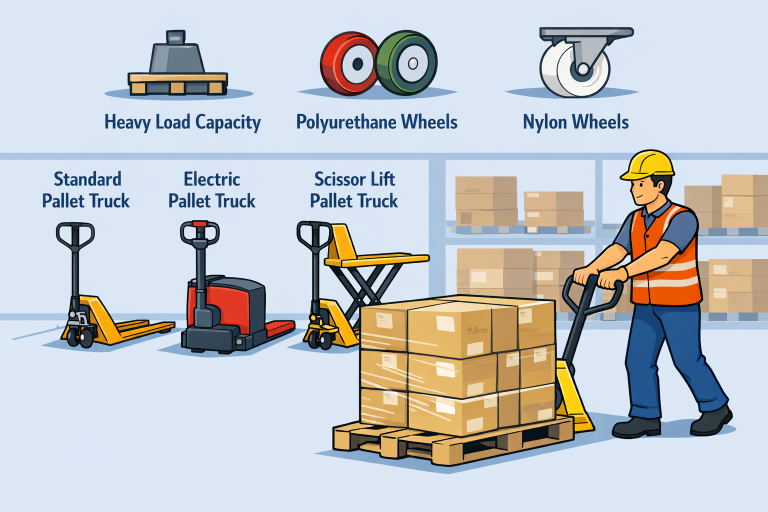
Load capacity is a critical factor in selecting a pallet truck. Underestimating your capacity requirements may result in breakdowns and unsafe working conditions, while selecting one that is excessively overpowered could lead to unnecessary expense and wasted space. Most pallet trucks are rated between 2,000 and 5,500 pounds, so it’s necessary to account not only for average loads but also the maximum weights handled during peak operations. Evaluate historical shipment data, seasonal fluctuations, and exceptional order situations to understand total load demands. Always choose a pallet truck whose rated capacity exceeds your anticipated maximum by a safe margin. This will help minimize the risk of overloading, which can damage the hydraulic pump, forks, and wheels, and ultimately jeopardize worker safety.
Evaluating Fork Dimensions
The compatibility of your pallet truck’s fork dimensions with the pallets and loads in your facility is vital to safe, efficient handling. Most commonly, European pallets require forks 150 and 200 mm wide, while other regional standards or custom pallets may require different sizes. A mismatch may cause pallets to not sit securely on the forks, increasing the likelihood of accidents and product damage. Fork length is equally important, as too short or too long can limit movement in confined spaces or hinder lifting. Aim for forks that balance ease of insertion into pallets with stable movement throughout your workspace. Measuring your facility’s standard pallet types before purchase ensures your pallet truck is a perfect fit.
Selecting the Appropriate Wheel Type
Pallet trucks are available with various wheel types to optimize performance on different flooring. Polyurethane wheels are resistant to wear, handle heavier loads, and perform well on rough, uneven surfaces. Rubber wheels offer quiet operation and cushioning and are best suited for smooth surfaces, such as retail stores or commercial showrooms. Nylon wheels are suitable for heavy-duty applications but can be noisy on hard floors. The correct choice of wheels not only aids maneuverability but also reduces floor wear and increases worker comfort. If your facility sees sharp turns or has many tight corners, choose trucks with wheels that facilitate smooth pivoting. For areas where strict hygiene or static dissipation is mandated, consider specialized wheel materials designed for those needs.
Considering Environmental Factors
Each material-handling environment presents unique challenges that affect equipment performance. If the pallet trucks are used in humid, wet, or corrosive environments, opt for models made from stainless steel or featuring protective coatings. These resist rust and chemical exposure, safeguarding your investment. In temperature-controlled warehouses, particularly freezers, look for trucks with hydraulic fluids and seals rated for sub-zero conditions to prevent malfunctions. If your facility handles food or pharmaceutical products, strict adherence to sanitary standards is critical. Some pallet trucks are designed with smooth frames and removable components for easier cleaning, ensuring compliance with FDA or other regulatory requirements.
Prioritizing Safety Features
Safety is a paramount concern when choosing and operating pallet trucks. Essential safety features to look for include ergonomic handles to reduce strain, responsive braking systems, and overload protection mechanisms that prevent excessive weight from being lifted. Additional features such as toe guards, anti-slip platforms, and safety signage further minimize workplace accidents. Workplace safety also depends on operator training and regular reviews of standard procedures. Encourage ongoing staff education and keep an eye on newer safety technologies or compliance requirements to keep your injury rates low and productivity high. Insights on workplace safety can be found through reputable organizations such as the National Safety Council.
Maintenance and Durability
Scheduled maintenance is crucial for the long-term functionality of your pallet truck. Opt for designs that make maintenance tasks straightforward, such as grease fittings, accessible hydraulic units, and user-friendly wheel replacement features. When selecting a model, inquire about the availability and cost of replacement parts, as well as support networks for emergency repairs. Durability is heavily influenced by the quality of materials used and the manufacturer’s reputation. Choosing a trusted brand with a history of reliability and strong warranty support reduces operational risks and ongoing expenses. Performing routine inspections, lubricating moving parts, and promptly addressing minor issues will extend your truck’s lifespan and ultimately safeguard your investment.
Conclusion
The process of choosing the best pallet truck requires evaluation of operational requirements, load capacities, environmental conditions, safety features, and maintenance needs. Taking a methodical approach to each factor ensures your equipment investment results in a safer, more productive workplace. With the right equipment and a focus on long-term reliability, organizations can achieve greater efficiency and worker satisfaction, while reducing costs and preventing accidents.