

Strategies for Business Growth: Marketing and Leadership
Defining the Modern Business Growth Strategy
A business growth strategy is more than just a desire to expand; it’s a meticulously crafted roadmap designed to increase a company’s market share, revenue, and overall value. In the dynamic landscape of 2026, such a strategy is essential for scaling operations, successfully entering new markets, or developing innovative products and services. Without a clear, sustainable growth strategy, companies risk stagnation or losing ground to competitors who are actively seeking market edges.
We recognize that truly effective growth is not accidental. It requires a deliberate plan that connects market opportunities with internal capabilities and long-term vision. This strategic approach ensures that every effort contributes to a measurable expansion, positioning the business for sustained success in an ever-evolving global economy.
Core Frameworks for Business Growth Strategies
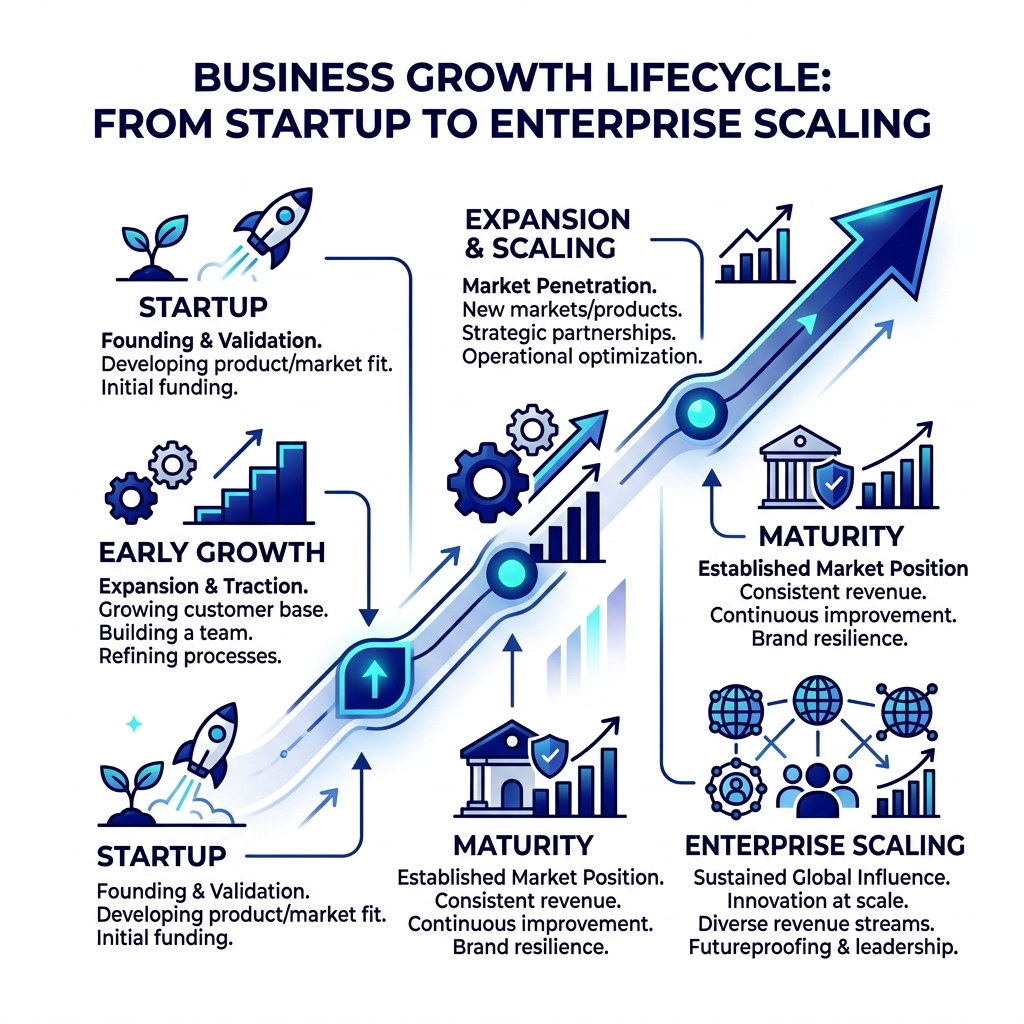
To achieve sustainable expansion, businesses often rely on established frameworks that guide their strategic decisions. One of the most widely recognized is the Ansoff Matrix, which outlines four major business growth strategies based on products and markets: market penetration, product development, market development, and diversification. Each approach carries distinct levels of risk and requires careful resource allocation, but when executed effectively, they can provide a significant competitive advantage and facilitate sustainable scaling. For organizations seeking to tailor these broad approaches, developing customized business growth strategies is paramount, ensuring alignment with their unique strengths and market position.
Let’s delve into each of these core strategies:
Market Penetration as a Business Growth Strategy
Market penetration focuses on increasing sales of existing products or services within existing markets. This is often considered the least risky growth strategy because it leverages familiar products and customer bases. Tactics include:
- Pricing Restructuring: Adjusting prices to attract new customers or encourage existing ones to buy more. For instance, a mobile service provider might offer lower entry-level prices to gain market share, as some companies have done successfully.
- Customer Loyalty Programs: Implementing reward systems to boost repeat purchases and foster brand advocacy. Restaurants, for example, often use rewards programs and delivery partnerships to increase repeat visits.
- Increased Brand Awareness: Investing in marketing and advertising to enhance visibility and attract a larger segment of the existing market.
- Cross-selling and Upselling: Encouraging customers to purchase complementary products or higher-value versions of existing offerings.
The goal here is to capture a larger share of the current market, often by outmaneuvering competitors or stimulating greater demand from existing customers.
Product Development and Diversification
Product development involves creating new products or services for existing markets. This strategy is about innovation and meeting evolving customer needs. Companies invest in R&D to introduce new features, improve existing offerings, or launch entirely new product lines that appeal to their current customer base. Tesla, for example, continuously evolves its electric vehicle models with software updates and new features, moving from luxury to more affordable options while maintaining its core market.
Diversification, on the other hand, is the riskiest but potentially most rewarding strategy. It involves introducing new products or services into new markets. This can be related (e.g., a beverage company launching a snack line) or unrelated (e.g., a tech company entering the healthcare sector). The aim is to spread risk across different ventures and tap into entirely new revenue streams. A notable example is Stanley, which expanded its annual sales from $70 million to $750 million by adding a water bottle product targeting a new customer base. Similarly, Amazon, initially an online bookstore, diversified into consumer goods, cloud services (AWS), and entertainment, becoming a global e-commerce giant with diverse offerings. Diversification requires thorough market viability assessments and often significant technological integration.
Four Distinct Types of Business Growth
Beyond the strategic frameworks, it’s crucial to understand the different types of growth a business can pursue. These categories often overlap but highlight different pathways to expansion:
- Organic Growth: This refers to growth achieved through a company’s internal efforts, such as increasing sales from existing products, expanding market share, or improving operational efficiency. It relies on internal marketing efforts, like SEO-focused blogs, which Zapier reported generated 72% of their organic website traffic in 2023. Organic growth is often slower but more sustainable, as it builds on the company’s core strengths and resources. For businesses focused on digital presence, optimizing for Agency landing page growth through SEO and content marketing is a prime example of organic expansion.
- Strategic Growth: This involves growth achieved through deliberate strategic initiatives that might include market expansion, product innovation, or forming strategic partnerships. It’s planned and executed to achieve specific long-term objectives, often requiring significant investment and a clear vision.
- Internal Growth: Similar to organic growth, internal growth focuses on leveraging existing resources and capabilities to scale. This can involve improving internal processes, investing in employee development, or optimizing supply chains to increase capacity and efficiency without external acquisitions.
- Acquisition Growth: This type of growth occurs when a company expands by acquiring other businesses, products, or assets. This can include Mergers & Acquisitions (M&A), which offers a fast track to new markets, technologies, or customer bases. While potentially high-risk, successful M&A can lead to rapid revenue diversification, the creation of partnership ecosystems, vertical integration, and significant economies of scale. Facebook’s acquisition of Instagram and WhatsApp are classic examples of acquisition growth.
Understanding these different types allows businesses to choose the most appropriate path based on their resources, risk tolerance, and strategic objectives.
Implementing Scalable Systems and AI in 2026
Effective business growth in 2026 demands more than just ambition; it requires a robust operational foundation capable of supporting expansion without breaking. Companies must implement scalable systems and leverage advanced technologies to drive efficiency and insight. This includes a systematic approach to market research, setting SMART (Specific, Measurable, Achievable, Relevant, Time-bound) goals, and continuously monitoring key performance indicators (KPIs).
Thorough market research is the first step, helping identify target markets and understand customer needs. For small businesses, this can involve local optimization, as 90% of people search online for businesses near them. Setting SMART goals provides clear objectives and a framework for resource allocation.
Crucially, scalable systems involve CRM automation to manage customer relationships and sales pipelines efficiently. Data-driven decision-making, fueled by real-time analytics, enables businesses to continuously evaluate data, improve customer experience (CX), and adjust products to align with preferences in new markets. Investing in new technologies to boost capabilities and customer satisfaction is a best practice for all businesses, regardless of size.
Here are essential growth KPIs that businesses should monitor to ensure their strategies are on track:
Essential Growth KPIs:
- Customer Acquisition Cost (CAC): The cost associated with convincing a customer to buy a product or service.
- Customer Lifetime Value (LTV): The total revenue a business can reasonably expect from a single customer account over the duration of their relationship.
- Churn Rate: The rate at which customers stop doing business with an entity.
- Gross Margin: The percentage of revenue left after subtracting the cost of goods sold.
- Revenue Growth Rate: The percentage increase in revenue over a specific period.
- Market Share: The proportion of the total market that a company controls.
- Conversion Rate: The percentage of visitors or leads who complete a desired action.
- Net Promoter Score (NPS): A measure of customer loyalty and satisfaction.

Leveraging AI within Business Growth Strategies
The role of digital marketing, SEO, AI, and data analytics in modern business growth is transformative. In 2026, Artificial Intelligence (AI) is no longer a futuristic concept but a practical tool for driving growth, especially for small businesses. According to a U.S. Chamber of Commerce report, 58% of small businesses now use generative AI, a significant jump from 40% in 2024.
AI-powered tools offer predictive analytics, allowing businesses to forecast trends, anticipate customer behavior, and optimize inventory. Personalization at scale becomes achievable, enabling companies to tailor marketing messages and product recommendations to individual customers, significantly enhancing CX. Process automation frees up valuable human resources, allowing teams to focus on strategic initiatives rather than repetitive tasks. Sentiment analysis helps businesses understand customer perceptions and market reactions in real-time, while competitive intelligence tools provide insights into competitor strategies.
McKinsey lists AI as one of the five ways “growth laggards” can drastically improve revenue growth, often by 10% or more, particularly through enhanced prospecting. Emerging trends for business growth in 2025-2026, such as GenAI and advanced automation, are revolutionizing how companies operate, making efficiency gains and data-driven insights more accessible than ever. Integrating these technologies can lead to more precise strategy execution and a significant competitive edge.
Leadership, Culture, and the Mindset of Outperformers
Continuous growth outperformance is not solely about implementing the right strategies; it’s deeply rooted in the mindset and cultural elements within an organization. New McKinsey research reveals that fewer than one in four companies consistently outpace their industry peers on revenue and profit growth. What distinguishes these outperformers is often a “courageous growth” approach – a willingness to pursue and stick with through-cycle growth strategies, even amidst economic turbulence.
This courageous mindset translates into several key cultural elements:
- Agility: The ability to adapt quickly to market changes, experiment with new ideas, and pivot strategies when necessary.
- Employee Mobilization: Engaging employees from the C-suite to the front lines, fostering a sense of ownership and aligning individual efforts with broader growth objectives. Transformations that activate the full organization are eight times more likely to succeed, and those where more than 20% of employees owned initiatives saw nearly twice the excess shareholder return.
- Innovation Culture: Building an environment that encourages risk-taking, invests in R&D, and integrates digital, analytics, and AI into core operations. This ensures a constant pipeline of new offerings and improved processes.
- Sustainability and ESG: Integrating Environmental, Social, and Governance (ESG) principles into the core business strategy. Half of “triple outperformers” (companies growing revenues, profits, and improving ESG scores) reached or exceeded 10% annual revenue growth between 2017 and 2021, compared to fewer than one in four companies overall. This demonstrates that sustainability can be a powerful accelerant for long-term growth outperformance, not just a cost center.
For leaders, maintaining Strategic clarity business growth strategies is fundamental. It means articulating a clear vision, fostering a culture where talent is retained and nurtured, and ensuring organizational alignment around ambitious, yet achievable, growth targets. This holistic approach to leadership and culture creates the fertile ground necessary for sustained, industry-leading growth.

Measuring Success and Avoiding Common Pitfalls
Measuring the success of growth strategies is as critical as defining them. Without clear metrics, businesses operate in the dark, unable to discern what’s working and what isn’t. Key performance indicators (KPIs) like Customer Acquisition Cost (CAC), Customer Lifetime Value (LTV), and churn rate are indispensable for evaluating the health and trajectory of your growth initiatives. For instance, a 5% retention boost can increase profits by 25% to 95%, underscoring the importance of LTV and churn. Gross margin also provides vital insights into profitability, ensuring that growth is not just about revenue, but also about healthy financial returns.
To build scalable models and measure success effectively, we recommend monitoring a concise dashboard of metrics weekly. This consistent review allows for timely adjustments and ensures that resources are allocated to the most impactful strategies.
Growth Metrics to Monitor Weekly:
- New Leads Generated: Track the volume of potential customers entering your pipeline.
- Conversion Rate (Lead-to-Customer): Monitor the efficiency of turning leads into paying customers.
- Website Traffic (Organic & Paid): Understand the sources and volume of visitors to your digital platforms.
- Social Media Engagement: Assess audience interaction and brand resonance.
- Customer Feedback/NPS: Gauge customer satisfaction and loyalty.
- Sales Cycle Length: Measure the time it takes to close a deal.
- Average Order Value (AOV): Track the average amount spent per transaction.
- Employee Productivity: Monitor output and efficiency of your team.
Avoiding common pitfalls is equally important. One significant risk is overextension, where a business expands too rapidly without adequate resources, infrastructure, or leadership depth. This can strain operations, dilute brand quality, and lead to financial instability. To mitigate this, businesses should employ cash flow discipline, ensure scalable systems are in place, and conduct thorough scenario planning to stress-test their growth assumptions.
Another critical pitfall is ignoring succession planning. Growth without a clear plan for leadership development and continuity can create dangerous dependencies on key individuals. This can hinder scalability and compromise the long-term value of the business. Sustainable growth reduces owner-dependence by relying on strong teams and documented systems rather than individual heroics. Before scaling, check the leadership bench, process capacity, and customer experience under higher load. Growth should always be tied to strengthening the overall enterprise value, not just increasing top-line numbers.
Frequently Asked Questions about Business Growth
What is the most cost-effective business growth strategy for small companies?
For small companies with limited budgets, prioritizing customer retention over acquisition is often the most cost-effective strategy. Acquiring a new customer costs 5 to 7 times more than keeping an existing one. Existing customers already trust your brand and tend to spend 67% more on average than new buyers.
Beyond retention, email marketing paired with a free CRM is arguably the highest-ROI starting point. Email marketing returns an average of $36 for every $1 spent. Platforms like HubSpot offer free CRM tiers for up to a million contacts, and Mailchimp provides free plans for smaller lists. This allows small businesses to build a lead-generation engine and nurture customer relationships for minimal to no upfront cost, scaling their investment only as their list and revenue grow.
How does artificial intelligence impact business growth strategies in 2026?
Artificial intelligence (AI), particularly generative AI (GenAI), is profoundly impacting business growth strategies in 2026. For small businesses, 58% are now using generative AI, up from 40% in 2024. AI’s utility spans several areas:
- Enhanced Efficiency: Automating repetitive tasks, from customer service chatbots to scheduling, frees up human teams to focus on strategic advice and client results.
- Personalization at Scale: AI-driven analytics enable businesses to offer highly personalized marketing, product recommendations, and customer experiences, boosting engagement and conversion rates.
- Predictive Insights: AI can analyze vast datasets to identify market trends, forecast demand, and predict customer behavior, allowing for proactive strategic adjustments.
- Content Generation: GenAI tools assist in drafting marketing emails, social media posts, and even blog content, significantly speeding up content creation processes.
- Competitive Intelligence: AI helps scan and analyze competitor activities, identifying gaps and opportunities in the market.
By leveraging AI, businesses can make more data-driven decisions, optimize operations, and create more impactful customer interactions, leading to accelerated growth.
When is a business ready to transition from organic growth to acquisition growth?
A business is typically ready to transition or add acquisition growth to its strategy when several internal and external factors align. Key indicators include:
- Steady Cash Flow and Profitability: The business has consistent, healthy cash flow that can support the financial demands of an acquisition, either through internal funding or by securing favorable financing.
- Growing Niche and Market Demand: The core market is robust and expanding, indicating a strong foundation upon which to build. Demand consistently exceeds current capacity, suggesting a need for rapid expansion that organic growth alone cannot fulfill.
- Scalable Systems and Processes: The company has well-documented, efficient operational systems that can absorb a new entity without significant disruption or breakdown.
- Strong Leadership Bench: There is a capable and experienced leadership team in place that can manage the complexities of integrating a new business, including cultural alignment and operational merging.
- Clear Strategic Rationale: The acquisition aligns with a clear strategic objective, such as entering a new geographic market, acquiring specific technology or talent, eliminating a competitor, or diversifying product lines.
Without these foundational elements, pursuing acquisition growth can lead to overextension, integration challenges, and ultimately, failure to realize the intended benefits. It’s crucial to ensure the business is not just able to acquire, but ready to integrate and grow the acquired assets effectively.
Conclusion
In the demanding business environment of 2026, achieving and sustaining growth is a continuous journey that marries strategic foresight with agile execution. We’ve explored how a clear understanding of growth strategies, from market penetration to diversification, combined with embracing various growth types—organic, strategic, internal, and acquisition—forms the bedrock of expansion.
The imperative to implement scalable systems, harness the power of AI and data analytics, and cultivate a culture of courage and innovation cannot be overstated. Leadership that fosters agility, mobilizes employees, and integrates sustainability into its core vision will distinguish continuous growth outperformers. By meticulously measuring success with critical KPIs and proactively addressing potential pitfalls like overextension or neglecting succession planning, businesses can navigate their growth trajectory with confidence.
Successful business growth in 2026 and beyond hinges on a long-term vision, strategic agility, and an unwavering commitment to continuous improvement and value delivery. By embracing these principles, businesses can not only survive but thrive, transforming challenges into opportunities for unparalleled success.